


Design Confidence Starts With Clarity
The earlier a developer can see the project clearly, the better the decisions become. Visualization certainly adds polish at the end of a concept, but it is also a strategic tool that helps teams understand, evaluate, and refine a project before costly commitments are locked in.
Seeing the Project Changes the Conversation
Plans and elevations are essential, but they do not communicate a project the way a developer, equity partner, operator, or municipality may need to understand it. Visualization creates a shared frame of reference, helping all stakeholders evaluate design direction with greater confidence.
Better Visualization Leads to Better Decisions
Renderings, massing studies, interior visualizations, and interactive walkthroughs help teams resolve questions earlier, and before they become expensive changes later. They turn assumptions into discussions and preferences into informed decisions.
Architectural Visualization Supports Site and Massing Decisions
At the architectural level, visualization clarifies how a building sits on its site, how massing responds to context, and how the overall form communicates identity and value. It helps developers understand the project beyond linework as a real place with real presence.
Interior Visualization Protects Design Intent and Procurement
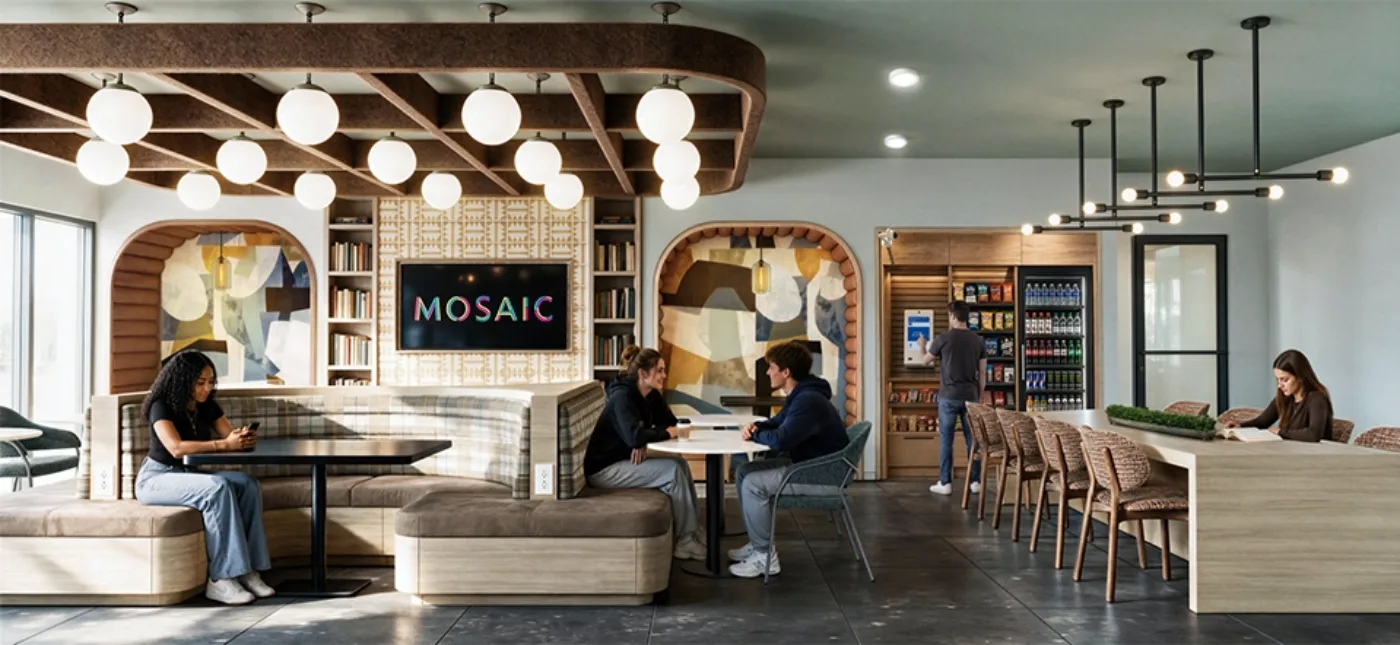
At the interior level, visualization helps ownership teams evaluate materials, finishes, furnishings, color relationships, and branded experiences before procurement begins. This reduces uncertainty, shortens approval cycles, and supports more confident investment in the final product.
Visualization Is a Risk-Reduction Tool
When stakeholders can see the project more clearly, they can align faster and act sooner. That matters. Visualization reduces miscommunication, supports investor presentations, strengthens municipal discussions, and gives developers a practical decision-making tool throughout the planning process.

It Also Supports Marketing and Lease-Up
High-quality renderings and walkthroughs do more than guide the design team. They often become valuable assets for leasing campaigns, investor decks, websites, and presentations. In that way, visualization serves both the design process and the go-to-market strategy.
Why Integrated Teams Visualize Better
When architecture and interiors are developed together, visualization becomes even more powerful. Exterior form, arrival sequence, interiors, amenities, materials, and resident experience all tell one cohesive story. This level of coordination gives developers a clearer picture of the finished asset and a stronger foundation for every decision made along the way.
Visualization is not just about showing what a project may look like. It is about making smarter decisions, reducing risk, building alignment, and improving outcomes before major investments are made. The clearer the vision, the stronger the project.
FAQs
Early design visualization helps developers understand a project more clearly, align stakeholders, reduce uncertainty, and make more informed decisions before major commitments are made.
Forum provides conceptual design support, renderings, architectural and interior visualizations, and interactive tools that help bring early design ideas into clearer focus.
Visualization reduces risk by improving communication, revealing issues earlier, supporting faster alignment, and helping teams make decisions before changes become more expensive.
Similar

Martin Manor: Rebuilding Affordable with an Eighty-Year History
Dixie Manor was among the oldest public housing communities in South Florida: born of a segregated wartime economy, sustained by generations of families, and...

Florida’s 2026 Building Code: What Multifamily Developers Should Know Before 2027
2026 Florida Building Code changes