


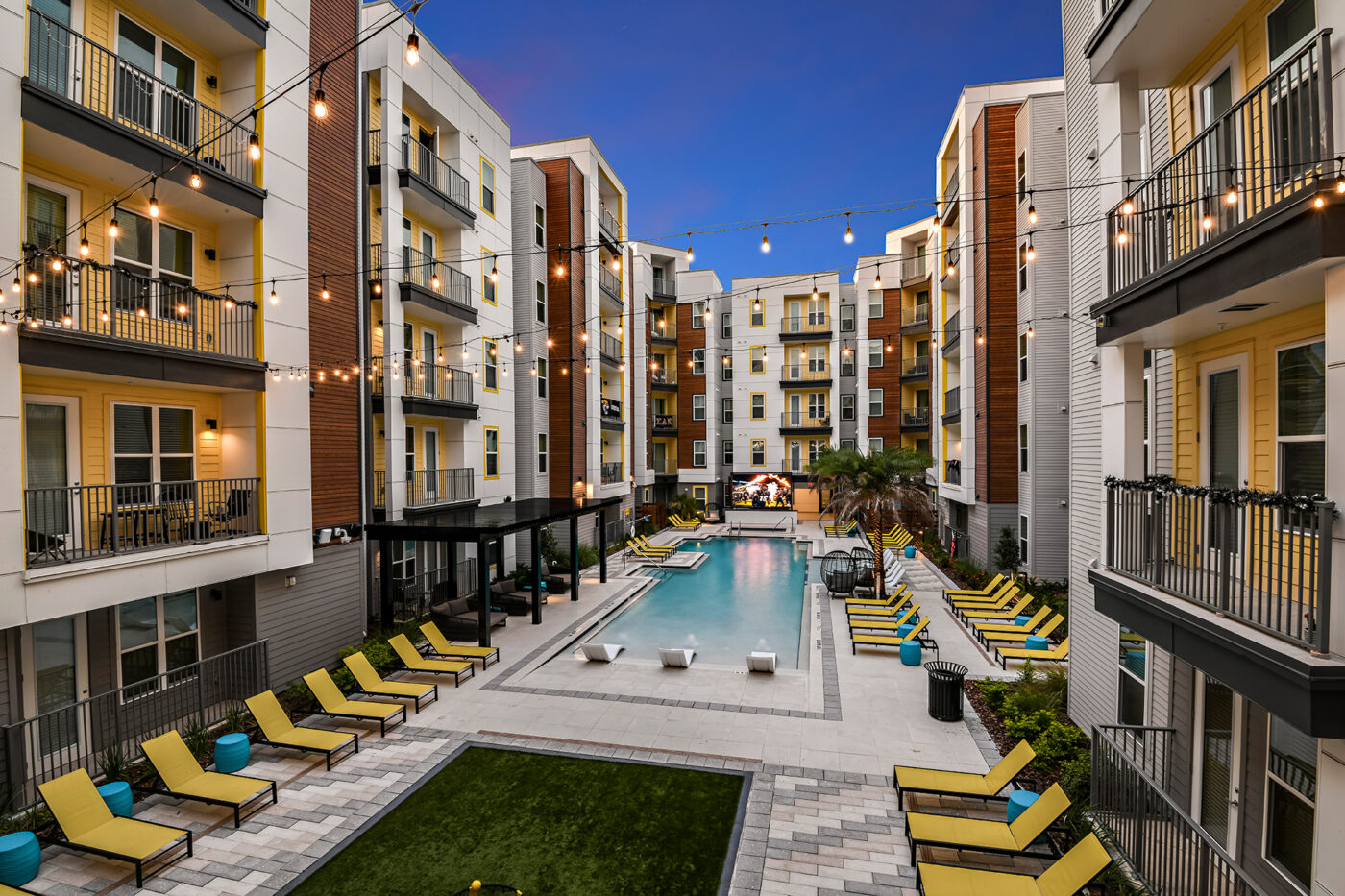
Student Housing Is Its Own Discipline
Student housing is often grouped under the broader residential umbrella, but the reality is far more complex. It demands a specialized design approach that balances density, durability, amenity expectations, safety, speed to market, and long-term operational performance. And, of course, all while creating an environment where students genuinely want to live.
More Than Beds and Buildings
Today’s student housing communities are expected to do more than provide shelter near campus. They must support wellness, academic focus, community, privacy, and social connection – often within highly competitive leasing environments. That means architecture and interior design have to work harder from day one.
Designing for the Student Experience
Strong student housing design begins with understanding how students live, study, gather, and recharge. The most successful communities create a clear balance between privacy and connection, energy and calm, efficiency and identity.
Amenity Spaces That Work Harder
Amenity spaces are central to the student housing experience. Study lounges, clubrooms, fitness spaces, outdoor courtyards, collaborative work areas, and hospitality-inspired lobbies all play a role in shaping leasing velocity and resident satisfaction. When these spaces are thoughtfully designed, they become both community builders and market differentiators.
Unit Planning That Supports Real Life
Student units must function at a high level. Efficient layouts, durable finishes, smart storage, acoustics, and intuitive circulation all contribute to a better resident experience and reduced maintenance issues over time.
Performance Matters Just as Much as Design
Student housing succeeds when it performs operationally and financially. For developers, that means design decisions must support leasing, durability, ease of maintenance, and cost efficiency without compromising the experience that drives demand.
Designing for Wear, Turn, and Long-Term Value
Student housing experiences a level of wear and turnover that requires durability to be embedded in the design strategy. Materials, furnishings, finishes, and layouts must support heavy use and frequent refresh cycles while still presenting a polished, highly marketable product.
Early Planning Protects the Investment
The earlier the design team is involved, the stronger the outcome. Site planning, test fitting, feasibility, and early amenity strategy all shape the project’s long-term success. Decisions made before design begins often have the greatest impact on yield, cost, and resident experience.
Why Cross-Market Experience Strengthens Student Housing
The best student housing isn’t borrowing blindly from other sectors, however it does benefit from them. Multifamily informs unit planning and amenity strategy. Hospitality informs arrival, brand expression, and shared spaces. Senior living contributes lessons in wayfinding, wellness, and thoughtful community design. Cross-market insight creates sharper student housing solutions.
Student housing requires more than residential experience. It requires strategic design thinking tailored to a market with its own demands, pace, and expectations. When architecture and interiors are aligned around both resident experience and operational performance, student housing becomes more than a project type – it becomes a long-term asset built to compete.
Similar
Martin Manor: Rebuilding Affordable with an Eighty-Year History
Dixie Manor was among the oldest public housing communities in South Florida: born of a segregated wartime economy, sustained by generations of families, and...

Florida’s 2026 Building Code: What Multifamily Developers Should Know Before 2027
2026 Florida Building Code changes