


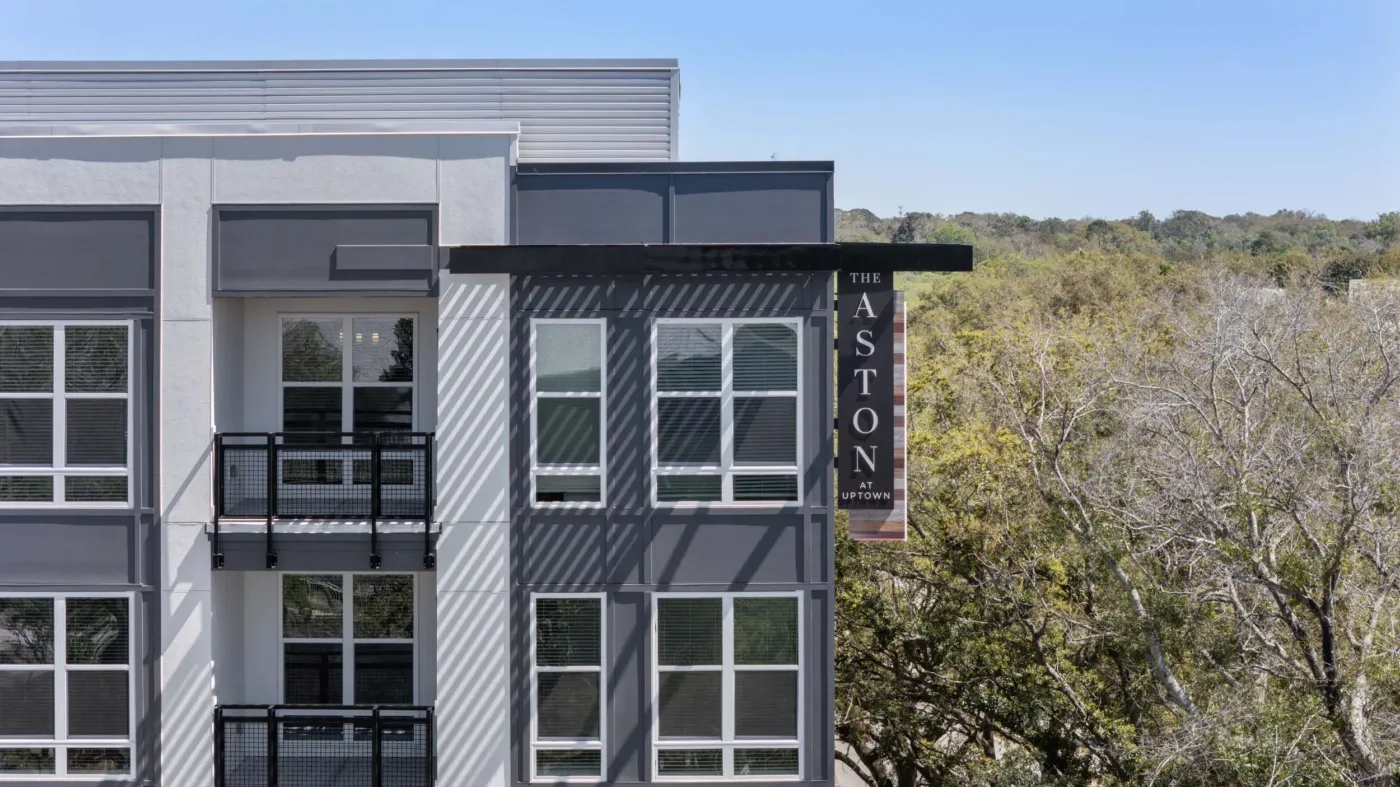
ASTON AT UPTOWN // ALTAMONTE SPRINGS, FLORIDA
As developers seek opportunities to deliver housing in established urban cores, the challenge isn’t just finding available land - it’s making the most of what little exists. The architecture and interior design studio at Forum is helping developers navigate these constraints with strategies that maximize density without sacrificing livability or community support. Aston at Uptown in Altamonte Springs, Florida, a 261-unit community developed by Eastwind Development, demonstrates how intentional design and engineering collaboration can unlock value on challenging urban sites. The first new multifamily development in Uptown Altamonte in nearly two decades, Aston at Uptown achieves 74 dwelling units per acre on just 3.5 acres - impressive density for a neighborhood that hadn’t seen new development in this category for almost 20 years.
Strategic Density Through Integrated Design
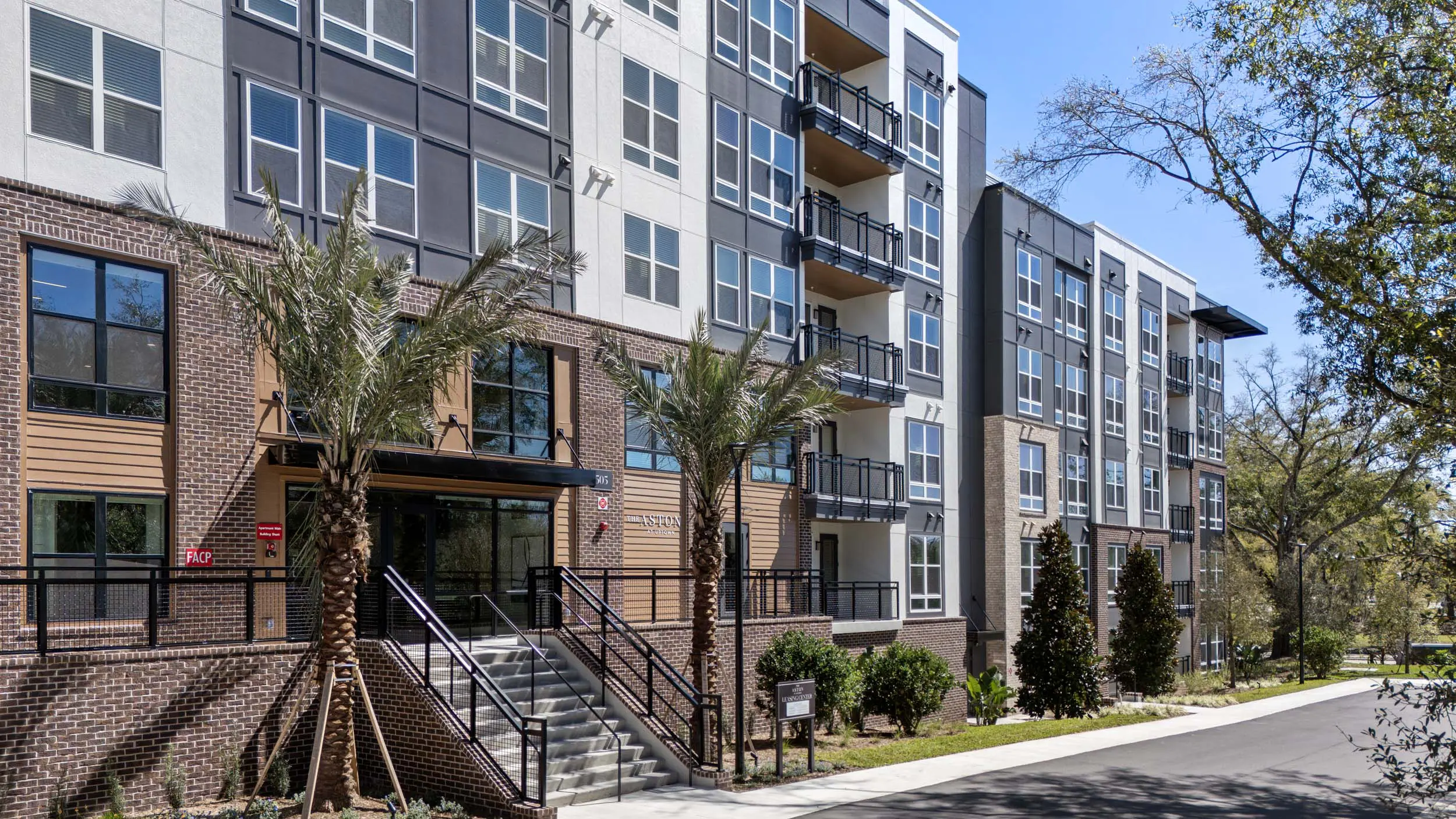
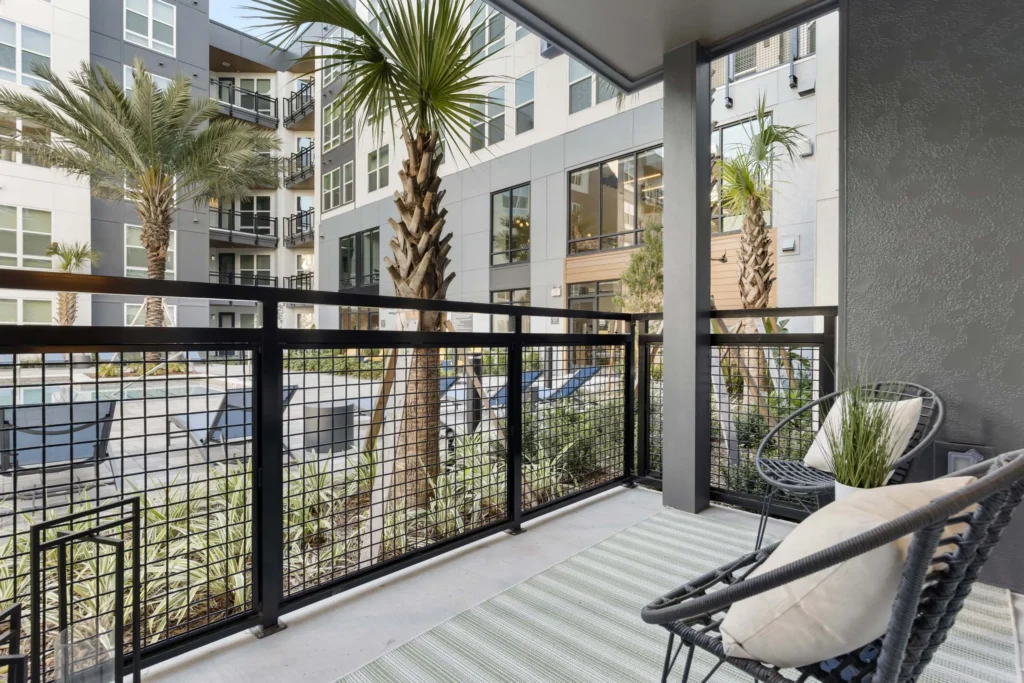
The key to unlocking density at Aston wasn’t pushing height or eliminating open space. It was rethinking how parking, stormwater management, and massing could work togethe as an integrated system rather than competing site constraints. Forum designed a five-story residential building wrapped around a central courtyard, and paired with a six-story precast parking garage. Rather than treating the garage as a necessary evil consuming valuable land, the team used it strategically: a stormwater vault was integrated beneath the structure, effectively consolidating two major site requirements into a single footprint. This approach freed up land for amenities, landscaping, and outdoor programming while satisfying municipal stormwater obligations without traditional detention ponds or sprawling infrastructure.
The result is a development that feels open and resort-oriented despite the tight site, with a central pool courtyard, outdoor grilling stations, and a dog park - amenities typically associated with larger suburban parcels.
Aston at Uptown achieves 74 dwelling units per acre on just 3.5 acres - impressive density for a neighborhood that hadn’t seen new development in this category for almost 20 years.


Strategic Density Through Integrated Design
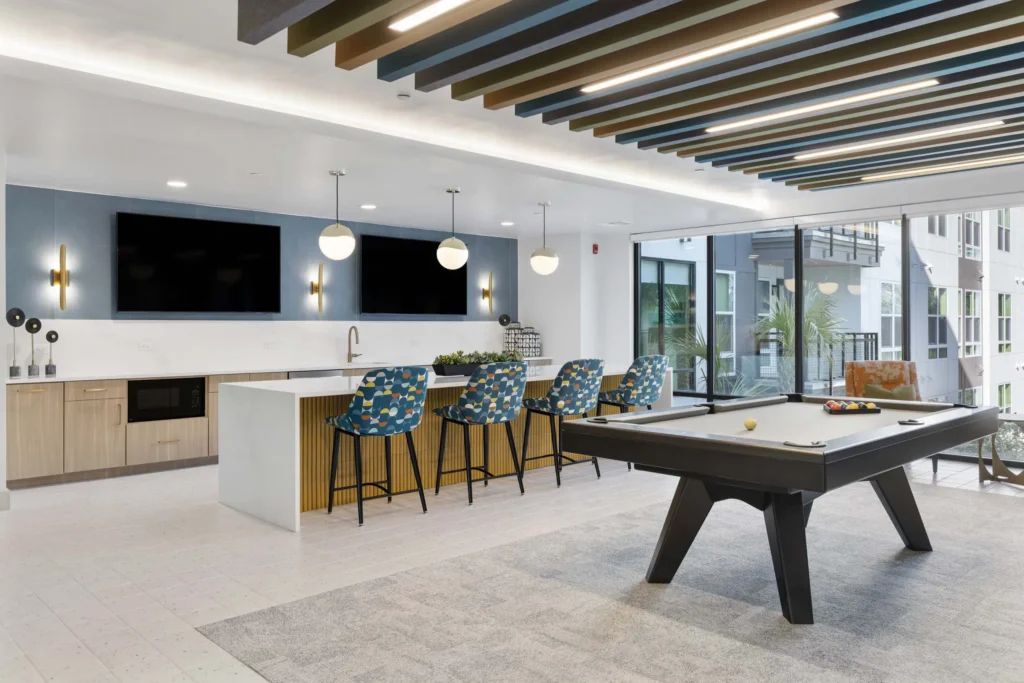
The key to unlocking density at Aston wasn’t pushing height or eliminating open space. It was rethinking how parking, stormwater management, and massing could work togethe as an integrated system rather than competing site constraints. Forum designed a five-story residential building wrapped around a central courtyard, and paired with a six-story precast parking garage. Rather than treating the garage as a necessary evil consuming valuable land, the team used it strategically: a stormwater vault was integrated beneath the structure, effectively consolidating two major site requirements into a single footprint. This approach freed up land for amenities, landscaping, and outdoor programming while satisfying municipal stormwater obligations without traditional detention ponds or sprawling infrastructure.
The result is a development that feels open and resort-oriented despite the tight site, with a central pool courtyard, outdoor grilling stations, and a dog park - amenities typically associated with larger suburban parcels.
Navigating Entitlement and Securing Density Bonuses
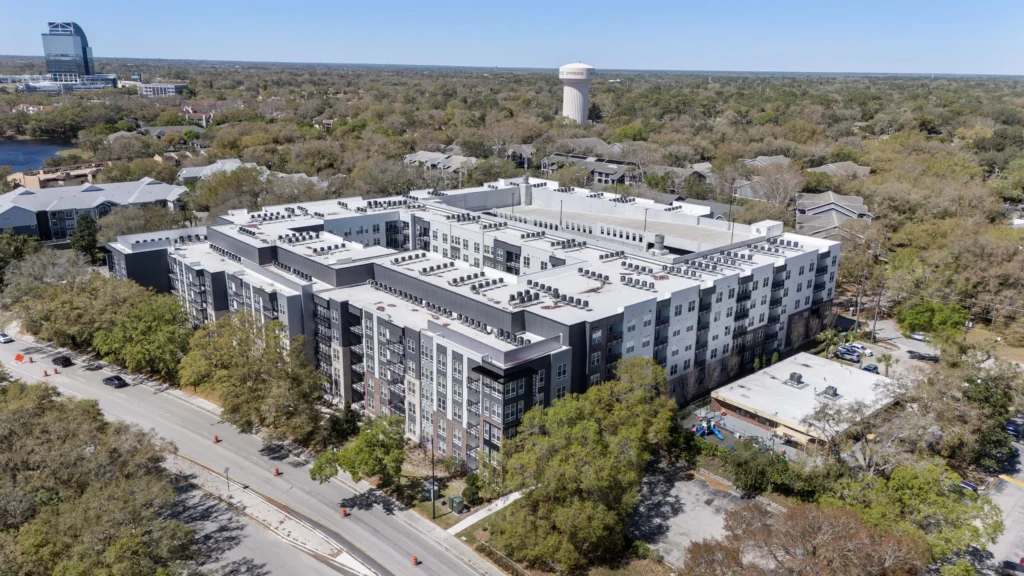
Urban infill projects often face significant entitlement hurdles, particularly in neighborhoods wary of density and traffic impacts. Forum worked closely with the City of Altamonte Springs to secure density bonuses that made the project financially viable while addressing municipal goals for urban housing and transit-oriented development. The project’s location in the Uptown district - adjacent to Cranes Roost Park, retail, dining, and future transit - positioned it as a live-workplay hub rather than an isolated apartment complex. By framing the development as an extension of the existing neighborhood fabric rather than a disruption, the team built support for increased density. The walkability and connectivity to existing infrastructure became selling points, not liabilities.
Engineering Solutions for Constrained Sites
Construction on a tight urban site presents logistical challenges that suburban greenfield developments rarely encounter. At Aston at Uptown, FaverGray faced these challenges with careful planning and adaptive problem-solving. One of the most dramatic moments came during construction of the southern retaining wall, when the team discovered a sinkhole. Rather than halting the entire project, FaverGray shifted manpower to other areas while engineers developed a remediation plan. The solution required an extensive grouting operation - 52 concrete trucks delivering 560 cubic yards of grout - to stabilize the foundation. Through coordination and flexibility, the team kept the project on track. The courtyard construction created another challenge. Due to site constraints, a section of the podium had to remain open for material staging, meaning it couldn’t be closed out until late in the sequence. This required precise coordination and an intense final push, but it allowed construction to proceed efficiently despite limited space.
On the sustainability front, the project incorporated a bio-swale system to manage stormwater runoff. Roof drains from the southern half of the building were directed into a vegetated area, allowing water to naturally percolate through the soil while vegetation absorbed excess moisture. This reduced the need for traditional drainage infrastructure and created a more resilient, sustainable site design.

A Model for Urban Infill Development
Aston at Uptown demonstrates how thoughtful design and engineering can unlock value on challenging sites. For developers exploring opportunities in constrained urban markets, this project offers a roadmap:
- Integrate infrastructure into building program to maximize usable land.
- Collaborate early with municipalities to align density goals with community benefits.
- Embrace flexible problem-solving during construction to keep projects on track.
- Design amenities for real use rather than chasing trends.
Every decision at Aston at Uptown contributes to a development that performs well financially, operationally, and experientially. It’s a project that strengthens the neighborhood while delivering the housing and lifestyle modern renters expect.
To see more, view Aston at Uptown.
Similar
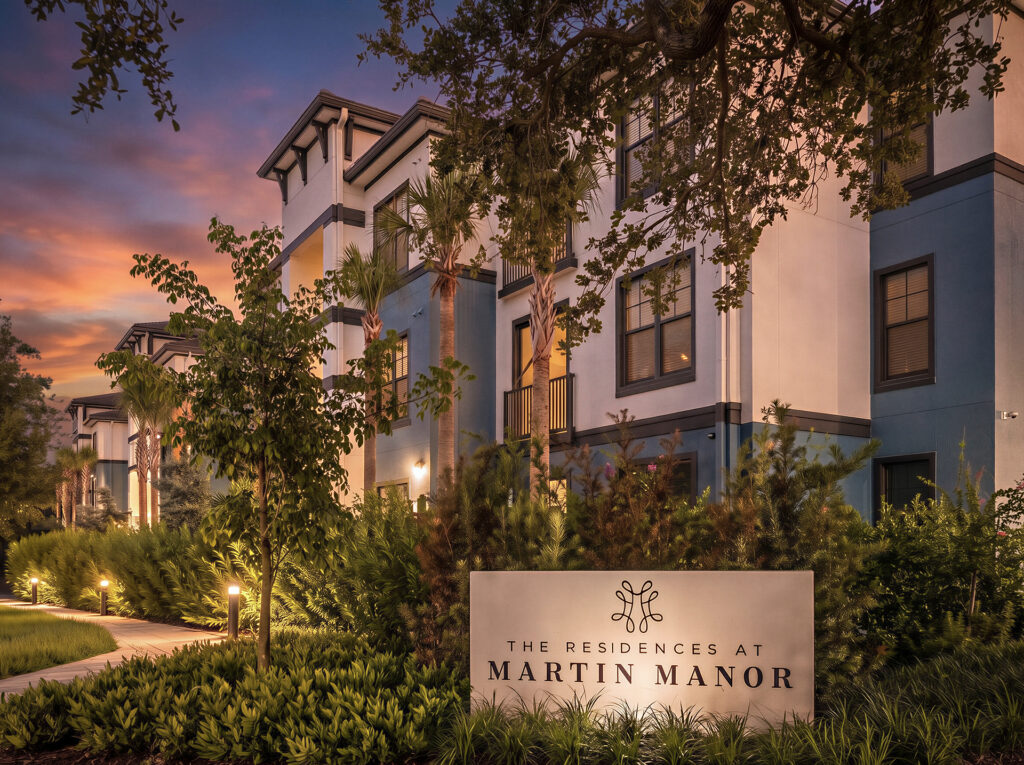
Martin Manor: Rebuilding Affordable with an Eighty-Year History
Dixie Manor was among the oldest public housing communities in South Florida: born of a segregated wartime economy, sustained by generations of families, and...

Florida’s 2026 Building Code: What Multifamily Developers Should Know Before 2027
2026 Florida Building Code changes